
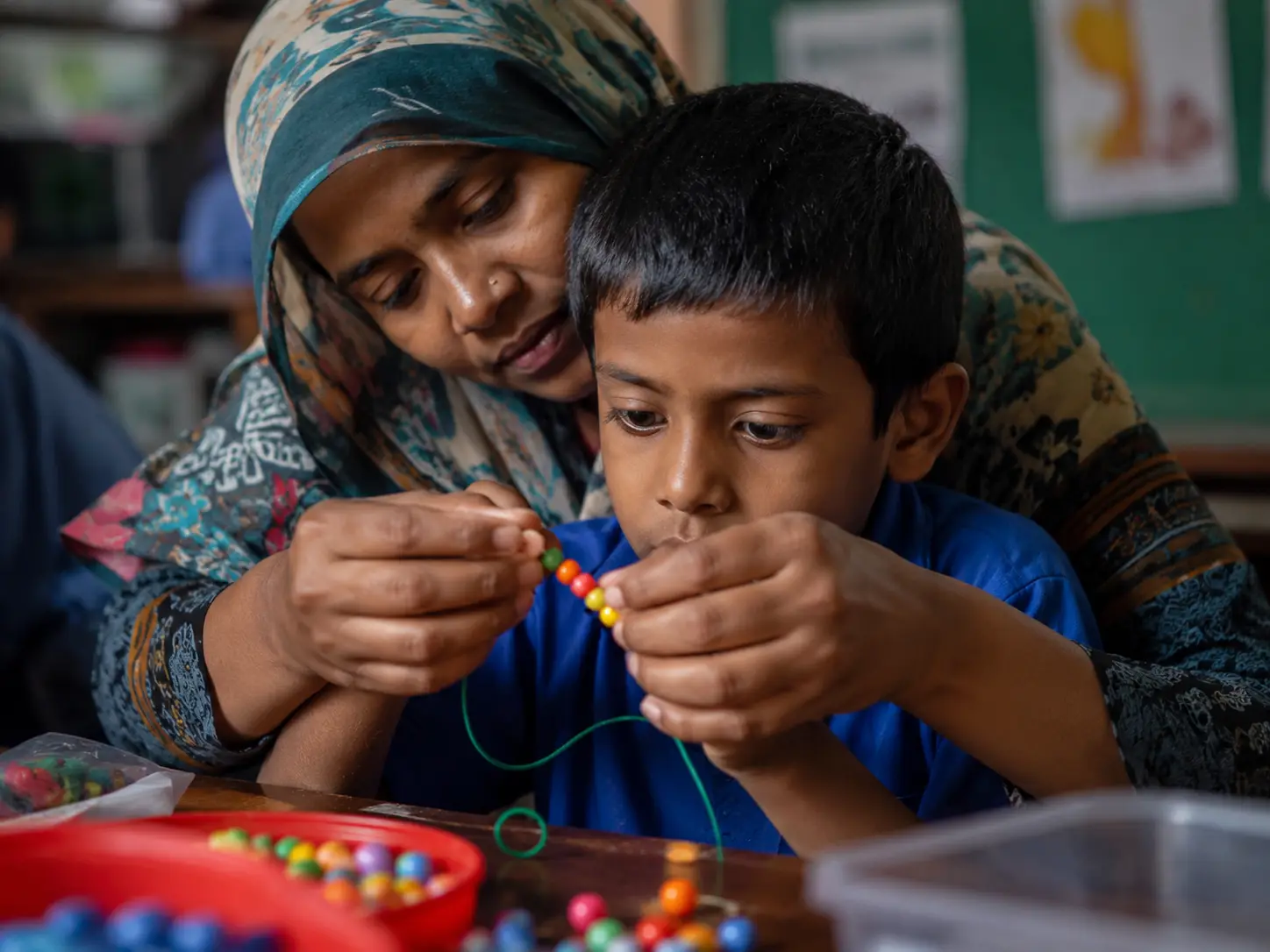
Therapy that reaches the house
You are already doing the therapy.We just make it count.
You spend the 166 hours a therapist never sees. Remote therapy turns them into a programme — in Bengali, at your own pace, with a clinician watching from wherever they are.
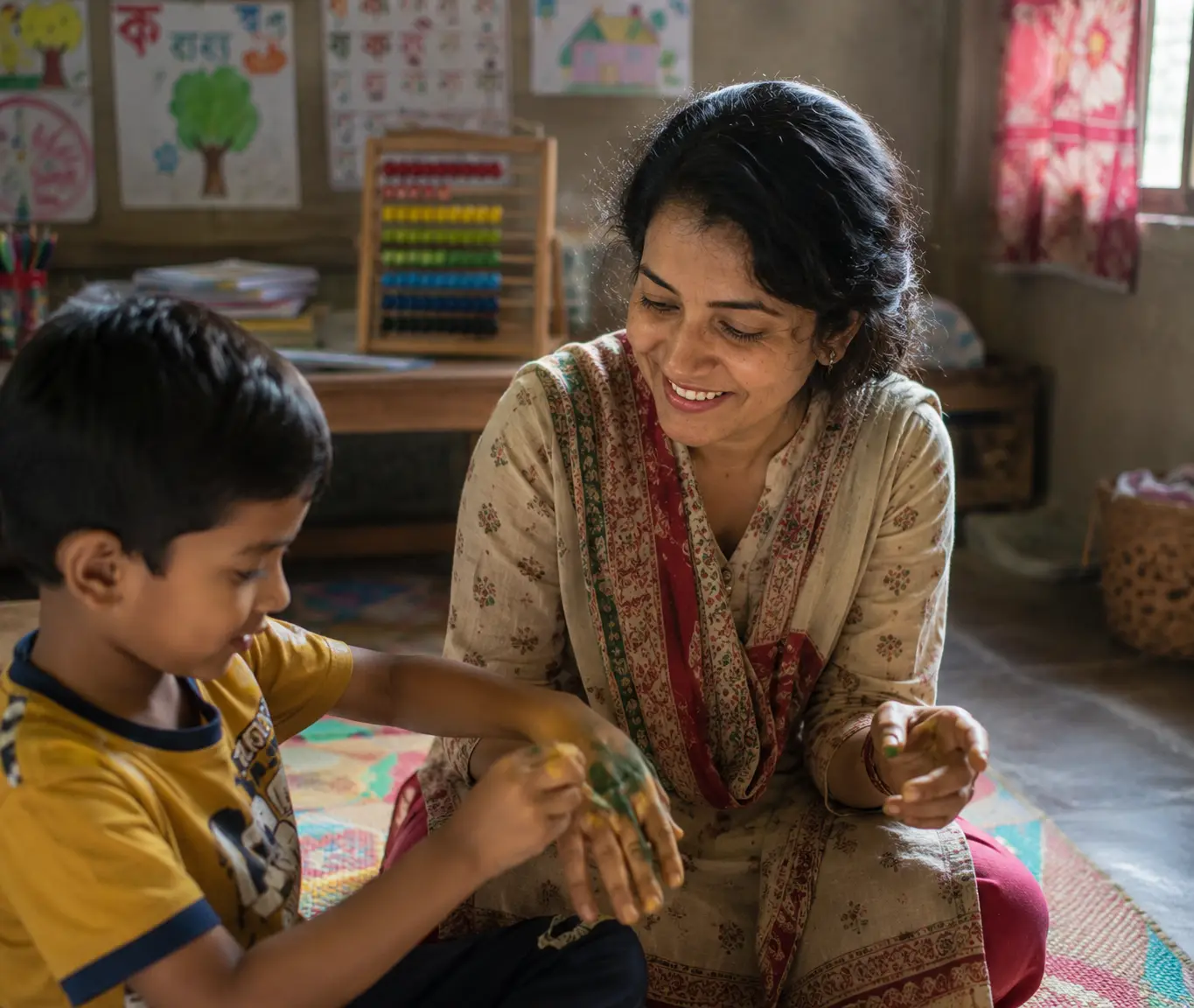
The loop a parent lives
Eight steps, and then round again.
Nothing here asks you to become a therapist — only to keep doing what you already do, with someone showing you where to push.
- You notice something
- Screen at home
- A clinician reviews it
- A plan for your week
- Practice, guided
- A live session
- Progress you can see
- The plan adjusts

What you can do
Built to make hard days easier.
Everything in Bengaliসবকিছু বাংলায়
The whole app, not a translated menu over an English product.
Screen from home
Play-based activities on an ordinary phone. No appointment, no travel.
Practice that fits a real day
Short activities you can do while cooking, or before bed.
Progress you can point at
Not "he seems better lately" but a record: what improved, and by how much.
Your centre stays in the loop
Your therapist sees what happened at home, so the next session starts where you are.
You're not doing this alone
A live session with a professional who watches, and corrects gently.
Getting started
Begin in three steps.
- Book a free screening. Tell us a little about your child. There is no form to get wrong.
- Run it from your phone. Guided activities, about twenty minutes, at a time that suits your child.
- Get your plan. Reviewed by a clinician, and yours to start the same week.
You do not need a diagnosis first. If something is worrying you, that is reason enough.
Questions parents ask
Honest answers, before you start.
Do I need a diagnosis before I start?
No. If something about your child's speech or development is worrying you, that is reason enough to screen. Early is always better — waiting to be certain is how the most useful years get lost.
Is the AI result a diagnosis?
No. Speech AI produces a preliminary picture of risk, which a qualified clinician then reviews and confirms. It is decision-support that extends scarce specialist capacity — it does not replace clinical judgment, and it never issues a diagnosis on its own.
What equipment do I need?
A smartphone with a working microphone and a reasonably quiet room. Nothing else.
Which children is this for?
Children with speech and language delay, autism spectrum disorder, Down syndrome, cerebral palsy, ADHD, apraxia, dysarthria and other neurodevelopmental and communication needs.
Is there a real person, or only the app?
Both. The app carries the week; a clinician runs live sessions over video, watches how you and your child work together, and corrects gently. Every plan the app follows was reviewed by that clinician first.
Is my child's information private?
Yes. Recordings and progress data are used to produce your child's plan and for nothing else. We do not sell data, and we do not share it with anyone outside your care team without your consent.
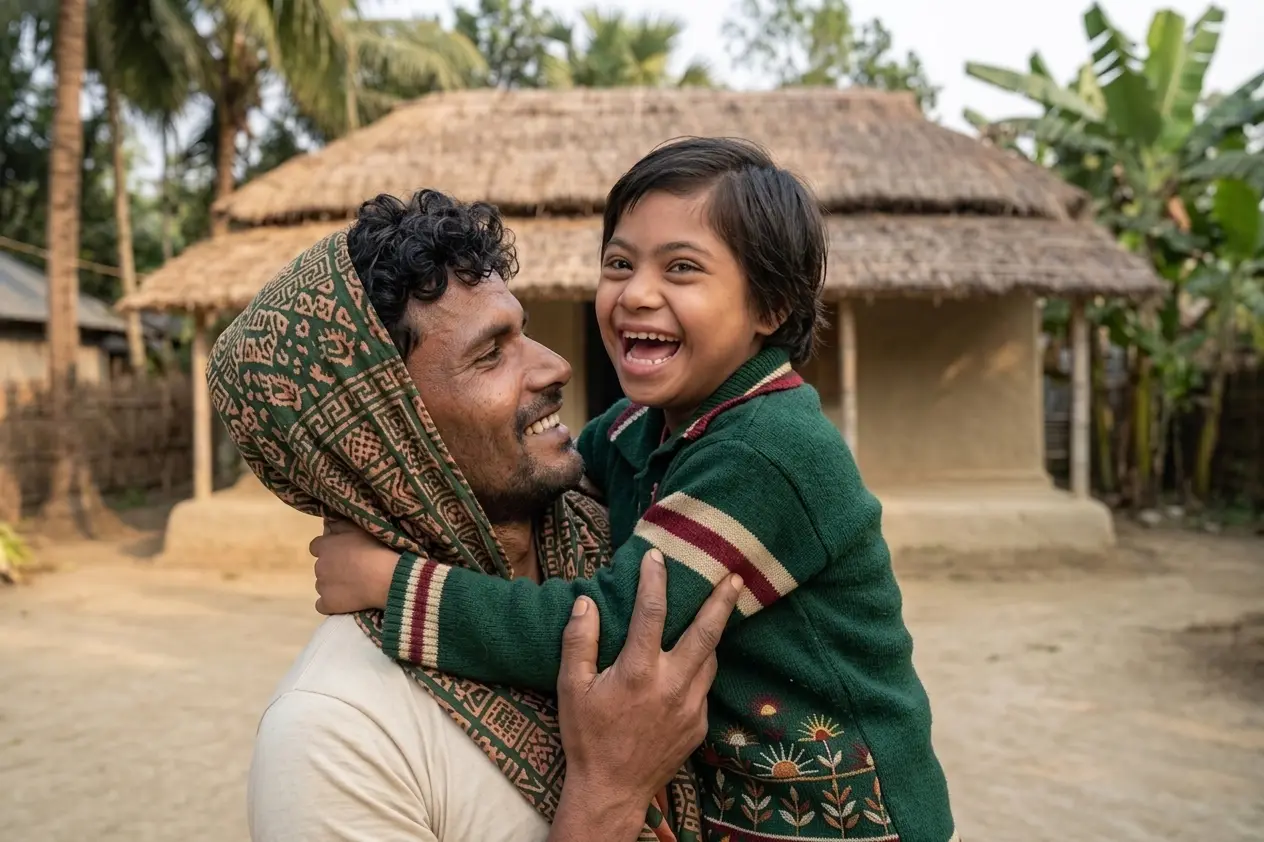
Your child's first step starts here.
Short, gentle, reviewed by a real clinician, and free. It is the only step you have to take today.